Source Borosilicate Glass Laboratory Funnel for Filtration, Transfer, and Separation
Explore 30 listings of borosilicate glass laboratory funnel options with varying capacities and dimensions. Buyers can compare features like heat resistance, material types, and customization support for research and lab use applications.
Key considerations
Products List








Comprehensive Sourcing Guide
Strategic Sourcing Guide for Borosilicate Glass Laboratory Funnels
Understanding Technical Specifications and Material Integrity
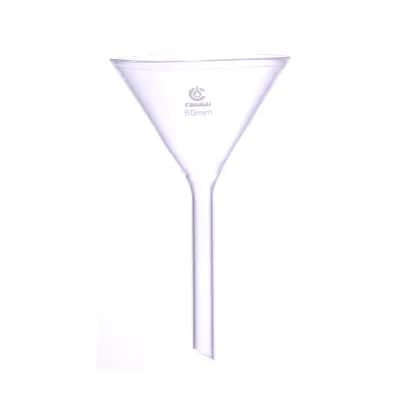
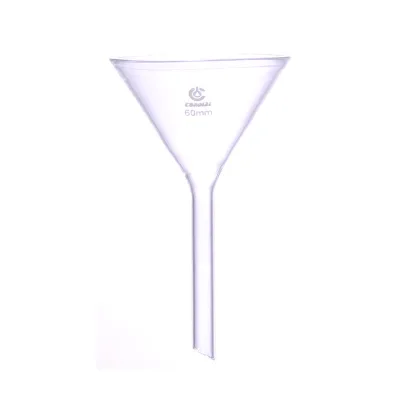
When sourcing borosilicate glass laboratory funnels, the primary focus must remain on the material composition and dimensional precision that define product utility. The core material for high-performance laboratory equipment is Borosilicate 3.3 glass, a composition specifically engineered to withstand thermal shock and chemical corrosion. Unlike standard soda-lime glass, borosilicate glass offers superior resistance to rapid temperature changes, a critical attribute for applications involving hot liquids or vacuum filtration. The supplied product data confirms that the material composition is explicitly listed as Borosilicate 3.3, ensuring the product meets the rigorous demands of modern laboratory environments.
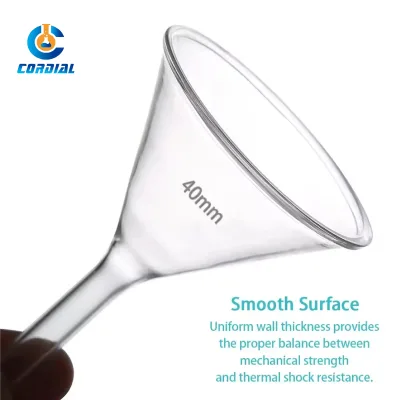
Dimensional accuracy is equally vital for the functionality of these funnels. The allowable error margin for the products observed is 0.3 mm, a specification that indicates a high degree of manufacturing precision. This tolerance level ensures that the funnel fits securely into standard laboratory stoppers and flasks without leakage or instability. The entrance and exit widths vary significantly depending on the specific model and application. For instance, specific models feature entrance widths ranging from 40 mm to 210 mm, with exit widths often matching the entrance or designed for specific flow rates. The capacity of these funnels can range from small 40 mm units up to large 210 mm variants, accommodating both micro-scale and macro-scale filtration needs. Buyers must verify that the specific model number, such as 1503 or 1504, aligns with the required entrance width and capacity for their specific workflow.
Classification of Funnel Types and Functional Applications
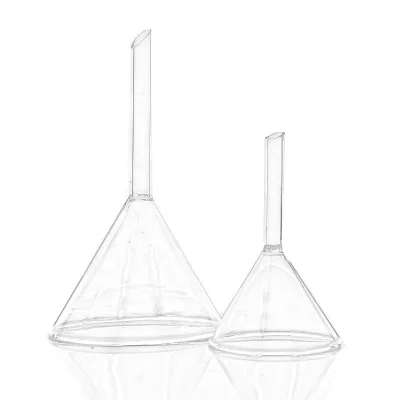
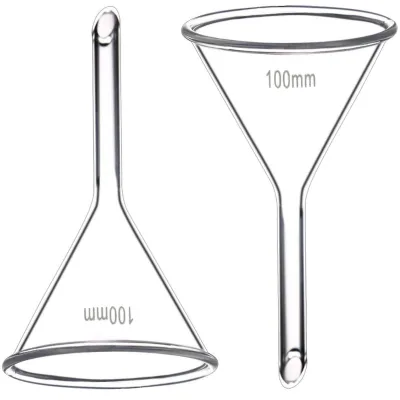
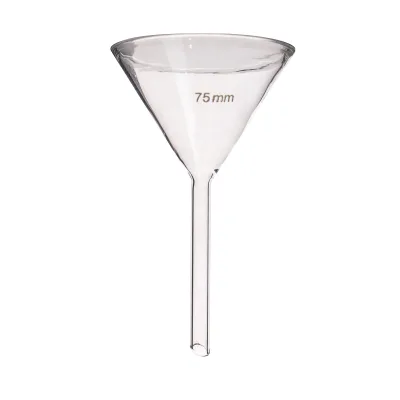
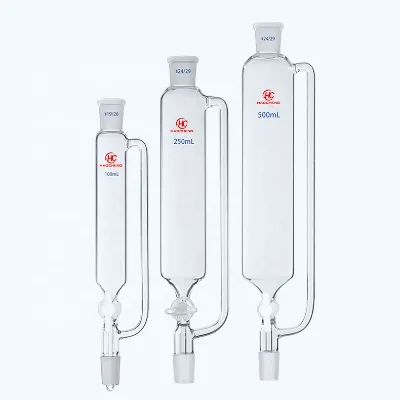
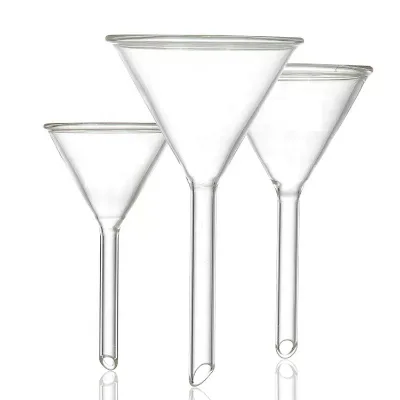
Laboratory funnels are not a monolithic category; they are specialized tools designed for distinct chemical and physical processes. The product data highlights several distinct types, including the Oil Funnel, Buchner Funnel, and Triangular Funnel, each serving a unique purpose. The Oil Funnel is typically designed for transferring viscous liquids or oils, where a wider entrance and specific stem geometry prevent clogging. In contrast, the Buchner Funnel is engineered for vacuum filtration, utilizing a perforated plate to support filter paper and facilitate rapid separation of solids from liquids. The Triangular Funnel, often made with a distinct shape, is frequently used for transferring powders or granular materials into narrow-necked containers.
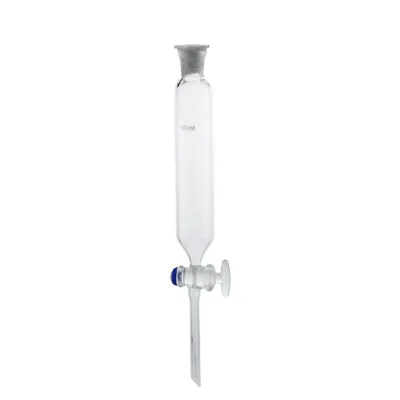
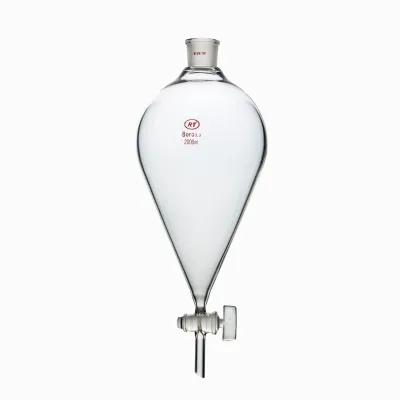
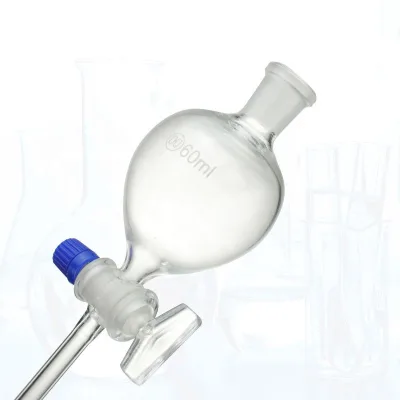
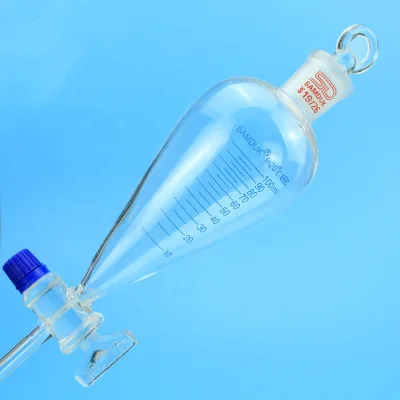
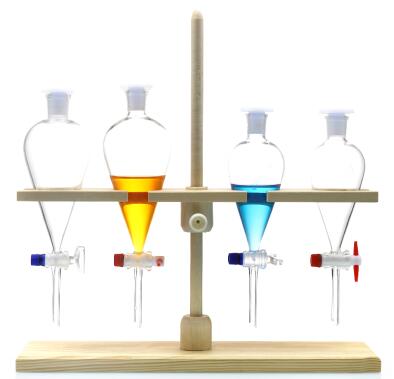
Beyond the physical shape, the application scope is broad, covering general lab use, lab research, and specific industrial processes. The data indicates that these products are suitable for applications ranging from simple liquid transfer to complex separatory functions. For example, the separatory funnel, identified by model number 1545, is designed for liquid-liquid extraction, with a capacity range extending from 10 ml to 20,000 ml. This vast range suggests that the supply chain offers solutions for both analytical chemistry and large-scale preparative work. The color of the glass is consistently clear, allowing for visual monitoring of the filtration process, liquid levels, and color changes during reactions. Buyers should select the funnel type based on the specific phase of the experiment, ensuring the geometry supports the intended separation or transfer method.
Cost Drivers and Procurement Economics
The economics of sourcing borosilicate glass funnels are influenced by a complex interplay of material costs, manufacturing complexity, and order volume. The observed price range in the market spans from 0.16 USD to 150 USD, a variance that reflects differences in size, complexity, and packaging. Smaller, standard funnels typically occupy the lower end of this spectrum, while large, specialized units like the separatory funnel or multi-piece funnel sets command higher prices. The single gross weight of the products also varies, ranging from 1.0 kg for smaller units to 18.000 kg for larger sets, directly impacting shipping costs and logistics planning.
Minimum Order Quantity (MOQ) is another significant cost driver. The data shows an MOQ range from 1 piece to 5000 pieces, offering flexibility for different buyer profiles. Small research labs or individual researchers may find value in suppliers offering an MOQ of 1 piece, allowing for the procurement of single units without committing to bulk inventory. Conversely, large-scale manufacturers or distributors may leverage higher volume orders to negotiate better unit economics, with some suppliers listing an MOQ of 100 pieces for specific items. The selling unit is typically listed as a single item, but packaging options like standard export cartons or custom designs can influence the final cost. Buyers must balance the unit price against the MOQ to optimize their inventory turnover and cash flow.
Supplier Capabilities and Customization Options
Evaluating a supplier requires a deep dive into their manufacturing capabilities and willingness to accommodate custom requirements. The product data indicates that suppliers offer extensive support for OEM (Original Equipment Manufacturer), ODM (Original Design Manufacturer), and OBM (Original Brand Manufacturer) models. This flexibility allows buyers to source products with their own branding, such as the "Cordial" or "CNWTC" brand names observed in the listings, or to request custom logos and designs. The attribute "Design: Customised" and "Logo: Customized Logo" confirms that suppliers are prepared to tailor products to specific corporate identities or technical specifications.
The place of origin for these products is consistently listed as Jiangsu, China, a region known for its robust glass manufacturing infrastructure. The delivery time is noted as "on time," suggesting a reliable supply chain, though buyers should verify this against their specific project timelines. The capacity of the manufacturing facilities is substantial, with some listings indicating a capacity range of 40-90 mm for certain models and up to 40-210 mm for others. This suggests that the suppliers have the machinery to produce a wide variety of sizes. However, buyers should be cautious about the "Single package size" variations, which range from 20x10x15 cm to 45x35x35 cm, as this affects freight calculations and storage requirements.
Quality Control and Compliance Verification
Ensuring the quality of borosilicate glass funnels is paramount for laboratory safety and data integrity. While the data mentions potential certifications like CE and standards such as ISO 9001, these are listed as low-confidence background information and should not be assumed without verification. Buyers must explicitly request and validate current certification documents from the supplier. The material specification of "Borosilicate 3.3" is a strong indicator of quality, but independent testing for thermal shock resistance and chemical durability is recommended for critical applications.
The allowable error of 0.3 mm serves as a baseline for dimensional quality control. However, buyers should also inspect for surface defects, such as bubbles, striae, or scratches, which can compromise the structural integrity of the glass. The "Feature: Heat Resistant" attribute is a key selling point, but it must be verified against the specific temperature limits of the intended application. For vacuum filtration, the funnel must withstand negative pressure without collapsing, a test that should be performed on sample units before full-scale procurement. The packaging, described as "Standard export carton" or "Carton Packing," must be robust enough to prevent breakage during transit, especially given the fragile nature of glass products.
Long-Term Procurement and Operational Considerations
Sourcing laboratory equipment is not a one-time transaction but a long-term partnership that impacts daily operations. The availability of a wide range of model numbers, such as 1503, 1504, and 1545, suggests that suppliers can support evolving laboratory needs. However, consistency in supply is crucial. Buyers should assess the supplier's ability to maintain consistent quality across different production batches. The "Single gross weight" and "Single package size" data provided can help in planning warehouse space and logistics, but buyers should confirm these figures for the specific batch they intend to purchase.
The "Application: Lab Research" designation indicates that these products are suitable for scientific inquiry, but buyers should ensure the specific funnel design matches their research protocols. For instance, the entrance width of 15 mm for a separatory funnel is distinct from the 60 mm entrance of a standard oil funnel. Misalignment between the funnel specifications and the laboratory's glassware standards can lead to operational inefficiencies. Furthermore, the "Capacity" ranges, such as 10-20000 ml, highlight the need for precise selection to avoid under- or over-sizing equipment. Long-term procurement strategies should include regular audits of supplier performance, focusing on delivery reliability, quality consistency, and responsiveness to custom requests.
Comparative Analysis of Product Attributes
To facilitate informed decision-making, the following table summarizes the key attributes observed in the product data, highlighting the variations that buyers must consider during the selection process.
| Attribute | Observation Range / Specific Value | Relevance to Buyer |
|---|---|---|
| Material | Borosilicate 3.3, Glass, Clear Glass | Determines thermal and chemical resistance. |
| Allowable Error | 0.3 mm | Indicates manufacturing precision and fit. |
| Entrance Width | 15 mm to 210 mm (e.g., 40, 50, 60, 75, 90, 100, 120, 150, 210 mm) | Dictates compatibility with flasks and flow rate. |
| Exit Width | 60 mm, 40-210 mm, or "other" | Affects flow dynamics and filtration speed. |
| Capacity | 40-90 mm, 40-210 mm, 10-20000 ml | Determines volume handling capability. |
| Product Type | Oil Funnel, Buchner Funnel, Triangular Funnel, Separatory Funnel | Defines specific application use case. |
| MOQ | 1 piece to 5000 pieces | Influences inventory strategy and cash flow. |
| Price Range | 0.16 USD to 150 USD | Impacts budget planning and cost analysis. |
| Packaging | Standard export carton, Carton Packing | Affects shipping safety and storage needs. |
| Origin | Jiangsu, China | Indicates supply chain location and logistics. |
This comparative view underscores the diversity of the market. A buyer seeking a Buchner funnel for vacuum filtration will prioritize entrance width and material strength, while a buyer sourcing a separatory funnel will focus on capacity and stopper compatibility. The wide range of MOQs and prices allows for tailored procurement strategies, but the technical specifications must always align with the laboratory's operational requirements. By carefully evaluating these attributes, buyers can secure high-quality borosilicate glass funnels that enhance laboratory efficiency and safety.
FAQs
What material is used for these laboratory funnels?
The primary material is Borosilicate 3.3 glass, ensuring high thermal shock resistance. Some listings also specify clear glass or combinations with plastic and metal components depending on the specific model type.
Which entrance widths are available for these funnels?
Entrance widths range from 15 mm up to 210 mm, including specific sizes like 40, 50, 60, 75, 90, 100, 120, and 150 mm. Buyers must select the width that matches their flask or filtration requirements.
Can suppliers provide customized branding and designs?
Yes, suppliers offer OEM, ODM, and OBM support with customized logos and designs available. This allows buyers to brand the products with their own identity while maintaining the standard Borosilicate 3.3 material quality.
What is the minimum order quantity for these items?
The minimum order quantity ranges from 1 piece to 5000 pieces depending on the supplier and specific product. Some items like the separatory funnel may require a minimum of 100 pieces, while others allow single unit purchases.
How precise are the manufacturing dimensions for these funnels?
The allowable error margin is 0.3 mm, indicating high manufacturing precision for fit and stability. This tolerance ensures the funnels fit securely into standard laboratory stoppers without leakage or instability during use.
Where are these borosilicate glass funnels manufactured?
The place of origin is consistently listed as Jiangsu, China, a region with robust glass manufacturing infrastructure. Buyers should verify specific factory details and delivery times, which are noted as on time in the product data.